

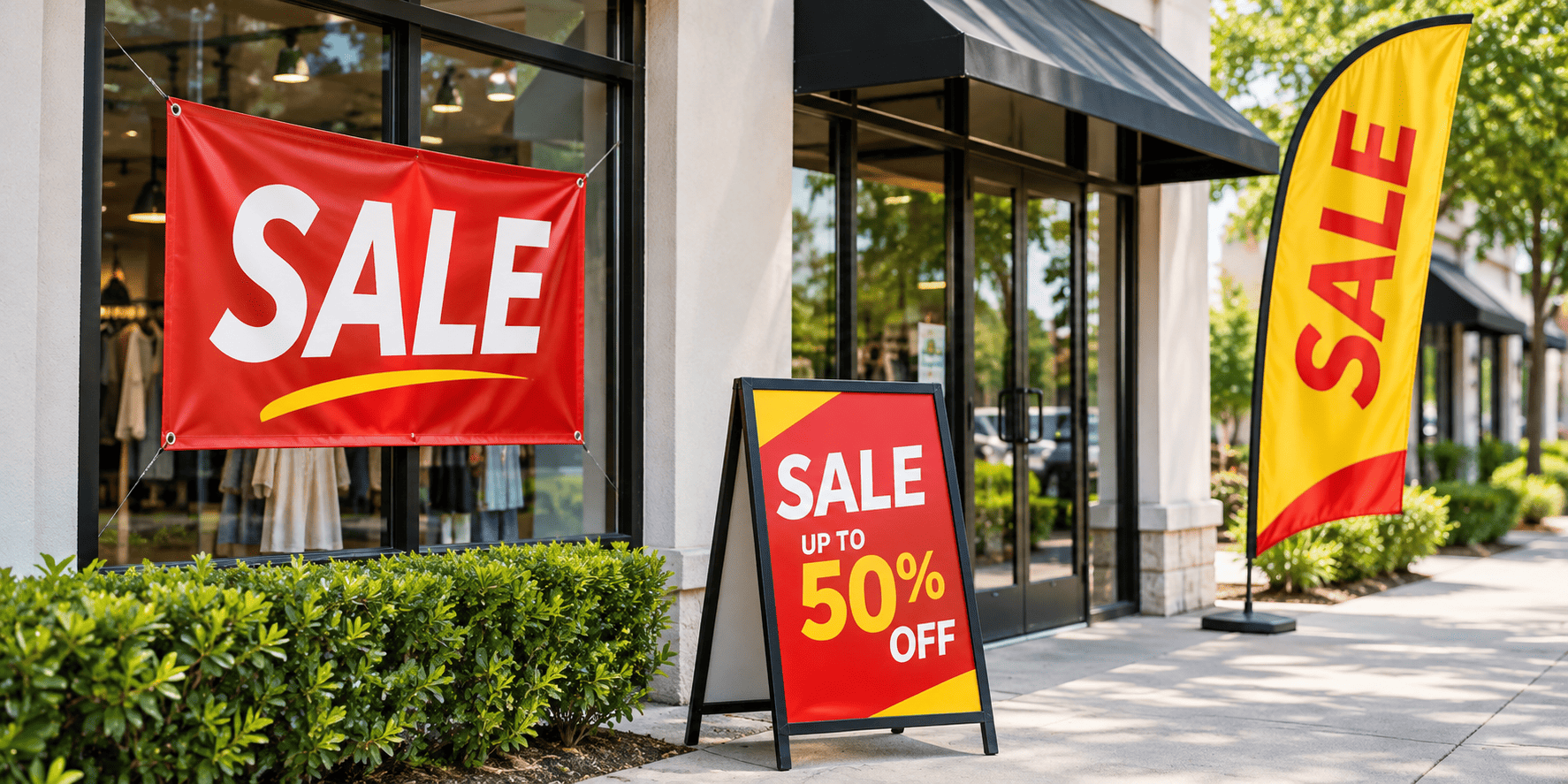
Temporary signage can help businesses promote events, sales, and storefront activity without committing to a permanent display. Well-designed banners can present a clear message, create visibility, and work across different locations when the format suits the setting. Visual Signs and Graphics can help businesses choose the right size, design, material, and placement for promotional, event, and storefront signage.
At Visual Signs and Graphics, we know that effective branding does not always require a complicated campaign. A well-planned display can make a space feel more welcoming, guide visitors toward important information, and give a promotion a clear focal point. Clear design and appropriate placement can make signage easier to notice and understand.
Why Banners and Flags Still Work
People encounter visual information constantly, so messages need to be easy to notice and quick to understand. Banners and flags display a message at the location, where customers can see it while walking, driving by, or attending an event. Their scale and placement make them useful for creating visibility without requiring permanent changes to a building or venue.
These displays can also be adapted to different goals. A business might use a banner to introduce a new service, while a retailer could highlight a seasonal sale. At an outdoor event, a flag can help attendees identify an entrance or locate a booth. The format is straightforward, but the purpose can be as specific as needed.
Make the Message Easy to See
A sign has only a brief opportunity to communicate. A strong design prioritizes one main idea, such as an event name, a limited-time offer, or a direction. Supporting details should be included only when they help the viewer take the next step. For example, a promotion banner may need a short offer and a website, while an event flag may only need a logo and a recognizable color scheme.
Clear contrast, readable type, and open space help people understand a message from a distance. Designers should consider the viewing environment: a display beside a roadway needs larger lettering than one placed near a registration table. Putting the most important information first makes the sign easier to read from the intended viewing distance.
Flexible Branding for Events and Sales
One of the strongest advantages of portable signage is flexibility. A display can be used for a single event, moved to another location, or brought back for a future promotion. This makes banners and flags practical for businesses that participate in markets, trade shows, open houses, school activities, fundraisers, and community celebrations.
They are equally useful for sales and seasonal campaigns. A storefront can use a banner to make a new offer visible from outside, while matching flags can add movement and help mark the business entrance. Coordinated colors and graphics keep the displays consistent, so each sign reinforces the same brand instead of competing for attention.
Build a Consistent Look Across Different Locations
When a business appears in several places, familiar visual details can help customers recognize it. A consistent logo, color palette, and type style make a pop-up display feel connected to a storefront or website. The wording may change for different events, but the overall visual identity can remain recognizable.
Our team at Visual Signs and Graphics can help businesses think through how signage might work across a range of settings. A display intended for a trade show may need to communicate services to people standing nearby, while an outdoor event sign may need to be visible across a larger area. Planning around the audience and location helps ensure that each piece has a clear role.
Choose the Right Display for the Job
Before selecting a sign, consider what it needs to accomplish and where it will be placed. A banner may be a good option when a business needs a broad area for a headline, offer, or event message. Flags can add height and motion, making them useful for drawing attention to an entrance, booth, or outdoor activity. Different sign formats can be combined when one needs to attract attention and another needs to provide more detailed information.
Material and setup also matter. Indoor displays may have different needs from signs exposed to wind, sunlight, or changing weather. Think about how often the sign will be moved, how it will be stored, and whether it needs to be reused. Choosing a format that suits the conditions can help the display remain attractive and suitable for repeated use.
Pair Portable Signage With Other Visual Elements
Banners and flags do not have to do all the work on their own. Vinyl lettering can display business hours, promotional messages, branding, or other information on suitable smooth surfaces. Used alongside portable signage, it can reinforce a promotion or make business hours and other practical details easier to find.
For example, an event space might use a flag outside to help attendees locate the entrance, a banner near the check-in table to identify the event, and lettering on a window to share a schedule. Each item serves a different purpose, yet together they create a clear and connected experience. This combination of sign types is especially helpful when visitors need both an initial visual cue and more detailed information once they arrive.
Design Tips for More Effective Signage
Good design starts with a clear objective. Before choosing images or writing copy, decide what viewers should notice and what action they should take. Are they being invited to enter, asked to register, or informed about a special offer? A specific goal helps keep the message focused and prevents a display from becoming crowded.
- Lead with the key message. Place the most important words where they are easy to notice, and avoid burying the offer or event name in small text.
- Use readable typography. Choose simple letterforms and size them for the distance from which people are likely to view the sign.
- Keep contrast in mind. Text should stand apart clearly from its background, even in bright light or a visually busy setting.
- Use brand elements consistently. Logos, colors, and imagery can help customers connect the display with the business they already know.
- Include only useful details. A short URL, date, or call to action can help, but too much copy may make the message harder to absorb.
Think About the Viewer’s Path
Placement is part of the design. A sign should be positioned where its intended audience can see it without obstruction. Consider how people approach the location, where they naturally pause, and what else might compete for their attention. A banner hidden behind furniture or a flag placed too close to a cluster of other displays may lose much of its impact.
It can help to check the view from several angles before an event or campaign begins. Walk toward the display from the same direction as a customer, then note whether the message is visible and understandable. Adjusting the height, direction, or surrounding placement can make the message easier to see.
Make Your Signage Work Beyond One Day
Reusable displays are most valuable when they are cared for properly. Follow any handling and cleaning guidance provided for the materials, and avoid folding or storing a display in a way that could damage its surface. Keep related parts together, and inspect the sign before each use so that wear, marks, or missing components can be addressed before the display is set up.
When a campaign changes, consider whether a display can be updated or whether it is better to create a new one. A sign with a timeless logo or general brand message may have a longer useful life than one featuring a date-specific offer. Separating lasting brand elements from temporary campaign details can make future planning more efficient.
Small Changes, Stronger First Impressions
Effective signage is not only about size. It is about matching the message to the audience, selecting the right format, and making the information easy to see. A flag can help a business stand out from nearby activity. A banner can make a sale or event feel organized and inviting. Vinyl lettering can add a neat, practical message to a window or wall. Each solution can contribute to a stronger first impression when it is designed for the setting.
For businesses preparing for an event, refreshing a storefront, or promoting a special offer, a little planning can go a long way. Start with the message, consider the viewing conditions, and choose visual elements that support the same goal. Visual Signs and Graphics is here to help you explore signage options that fit your space and audience. Clear design and appropriate placement can help flags and banners communicate the intended message effectively.
Ready to make your next event, sale, or storefront promotion easier to spot? Get in touch with Visual Signs and Graphics for a complimentary consultation about custom banners, flags, and other promotional signage.